What Parents Should Know About Cyclospora
Over the past few weeks, you've likely seen headlines and social media posts about Cyclospora, a parasite linked to contaminated fresh produce. While the news can sound alarming, it's important to remember that the overall risk remains low, and most cases of diarrhea in children are caused by common viruses—not Cyclospora.
The good news is that we are not overly concerned for our patients at this time.
There are currently no reported cases in California or neighboring states that have been linked to the current outbreak. For most children, the risk remains very low.
We do not recommend limiting your child's intake of fresh fruits and vegetables. Produce is an important part of a healthy diet and should continue to be offered as usual.
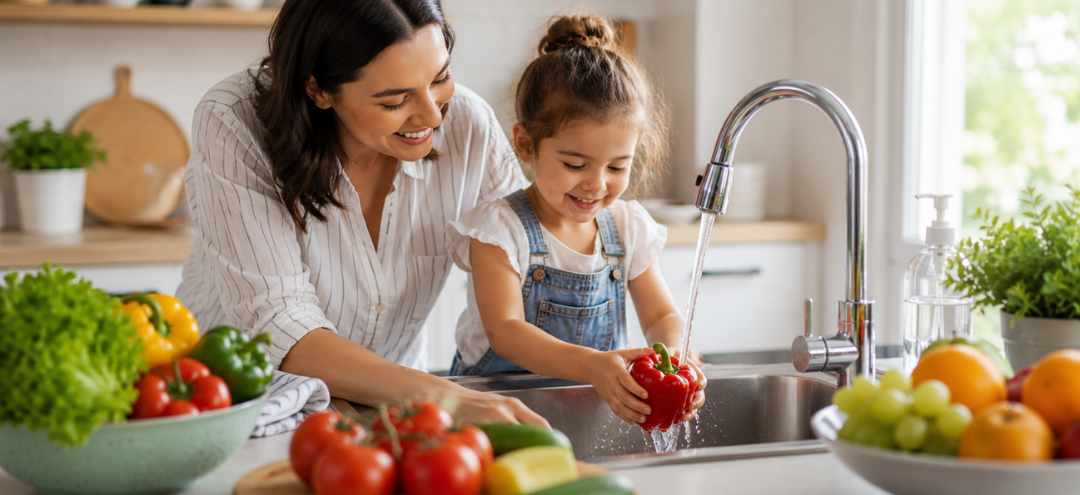
As always, wash your fruits and vegetables thoroughly before eating or preparing them, just as you normally would. There's no need to avoid healthy foods or make major changes based on the current news.
To help separate fact from fiction, Dr. Bess Raker, Co-Founder of Beverly Hills Pediatrics, recently partnered with Muu to answer parents' most common questions about Cyclospora and what families actually need to know.
What is Cyclospora?
Cyclospora is a microscopic parasite that can contaminate certain fresh fruits, vegetables, and water. It may cause:
- Profuse watery diarrhea
- Stomach cramps
- Fatigue
- Loss of appetite
- Nausea
Unlike many stomach viruses, symptoms can last a week or longer if left untreated.
Should parents be worried?
For most families, the answer is no.
The vast majority of children with diarrhea have a common viral illness, not Cyclosporiasis. Mild diarrhea that improves within a few days is unlikely to be caused by this parasite.
Mild diarrhea is unlikely to be Cyclosporiasis.
Most acute episodes in healthy children are common viruses (like norovirus or rotavirus) and don't need lab tests. Testing is generally only warranted when diarrhea lasts 7+ days.
Can I wash Cyclospora off produce?
Cyclospora is not easily removed by rinsing with water alone. Washing produce is still an important habit, but it doesn't completely eliminate the parasite.
The good news:
- Thoroughly cooking produce will kill Cyclospora.
- There is no need to avoid fruits and vegetables — just continue practicing safe food preparation.
What should I do if my child has diarrhea?
Most children recover at home with supportive care.
The most important treatment is:
- Encourage frequent small sips of fluids.
- Use oral electrolyte solutions when appropriate.
- Continue offering regular foods as your child tolerates them.
- Contact your pediatrician if your child has:
- Fewer than 3 wet diapers in 24 hours
- Severe watery diarrhea lasting more than 7 days
- High fever
- Blood in the stool
- Severe abdominal pain
- Signs of dehydration such as dry mouth, no tears, or unusual sleepiness
You can view the full educational post on our Instagram:
As always, if you have concerns about your child's symptoms, our team is here to help. Please call our office to speak with one of our pediatric providers or schedule an appointment.