Why Getting Outside Matters More Than Ever for Our Kids

We talk a lot about nutrition, sleep, and routines when it comes to raising healthy kids—but one of the most powerful (and often overlooked) tools for supporting children’s mental health is surprisingly simple: Time outside.
Why the outdoors matters
Spending time outside isn’t just “nice to have”—it’s essential for a child’s emotional and cognitive development.
Research consistently shows that time in nature can:
- Reduce anxiety, stress, and symptoms of depression
- Improve focus and attention (especially in children with ADHD)
- Support better sleep
- Boost mood and resilience
- Encourage creativity, independence, and problem-solving
In a world where kids are spending more time indoors and on screens, getting outside has become one of the most impactful ways to reset their nervous systems and support overall wellbeing.
“But what about the weather?”
Here’s the truth: there’s no such thing as bad weather—just mismatched expectations (and sometimes the wrong outfit).
Children benefit from outdoor time year-round, not just on perfect sunny days. In fact, exposure to different environments—cool air, light rain, cloudy skies—helps build adaptability and resilience.
How to make it work (in real life)
You don’t need a hiking trip or hours of free time. Small, consistent moments matter most.
1. Lower the bar
A 10–20 minute walk, playing in the yard, or even sitting outside for a snack counts.
2. Make it part of the routine
Try:
- After-school decompression outside before homework
- Family walks after dinner
- Weekend “outdoor time” that’s just as non-negotiable as other plans
3. Dress for success
Light layers for cooler days
- Rain jackets and boots for wet weather
- Hats and sunscreen when it’s sunny
- When kids are comfortable, they’re far more likely to enjoy the experience.
4. Let it be unstructured
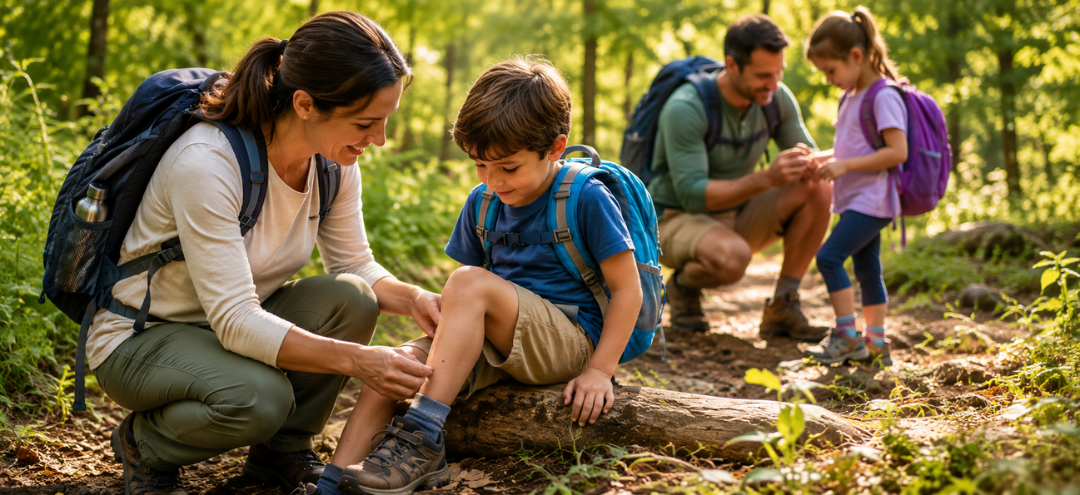
Kids don’t need organized activities. In fact, free play outdoors is where the biggest benefits happen—exploring, imagining, building, and just being.
5. Join them (when you can)
Even a few minutes of shared outdoor time can strengthen connection and model healthy habits.
A gentle reframe
If getting outside feels like “one more thing,” try thinking of it as a tool—not a task.
A reset.
A pressure release.
A way to support your child’s mental health without adding more structure to your day.
As always, every family is different. Start small, stay consistent, and find what works for you.